Universal Design for Learning (UDL) is an approach or framework that helps students own their learning. It is based on years of research on neuroscience and learning. In this framework, educators acknowledge the uniqueness of every student — their unique strengths, needs, backgrounds, and skills — so we can start removing barriers to learning and make learning more accessible.
Starting along the UDL pathway is a journey. While it can feel overwhelming, there are plenty of starting points and resources to support your work. The goal of this module is to provide an overview of UDL and some helpful resources to get you started.
Universal Design for Learning Guidelines
Starting the path toward a universally designed classroom or school can seem daunting. The chart below provides a way to get started. These are some starting points and strategies that educators can try with their students. For more information, check out Embracing UDL Part 1 in the Resources section below (start at the 50-minute mark).
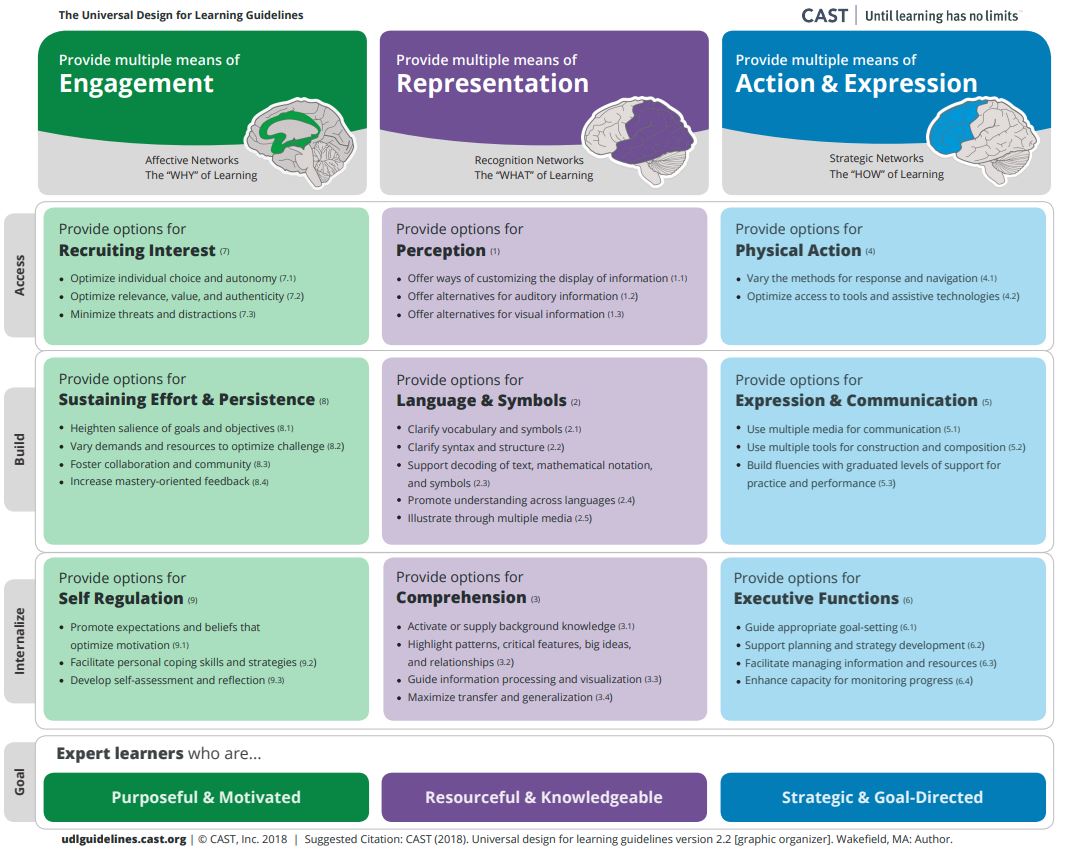
- Interactive UDL Guidelines Page — More details and ideas for developing the areas above.
- UDL Progression Rubric — A rubric for teachers that provides a clear pathway towards the UDL guidelines; a great tool for self-reflection and feedback.
An Overview of UDL
In this video, we review what UDL is, some key ideas, and address some common misunderstandings.
Additional Resources
- Embracing UDL Part 1 — WGBH Education (start at 12:00)
- UDL Playbook for School and District Leaders — CAST